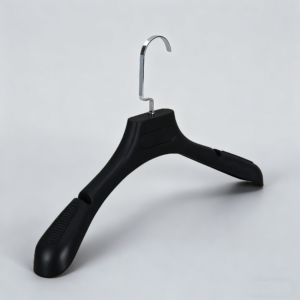

Buying rubber-coated hangers in bulk starts with a garment requirement and a defined hanger configuration. A finish description leaves the body, hardware and packing undefined. Your specification needs to identify the body, garment fit, surface, hardware, branding and packing for each order line.
Describe the surface you want and the clothing it will support. Lelvion’s current Rubber Hangers category is the starting point for available shapes. Available options need to be confirmed for the selected model and project.
Define the garment assortment before choosing a finish
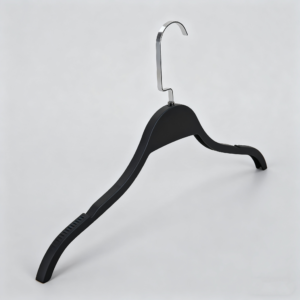
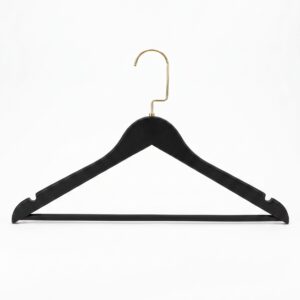
Group the clothing by how it needs to hang. Shirts, strap dresses, structured jackets and garments held by clips need different support points. A coordinated outfit may also need a trouser bar. Choosing a finish before deciding on these features leaves the main fit question unresolved.
Send representative garment photos and identify the size range. Include a physical garment for sampling when possible, especially if the shoulder construction, neckline or fabric makes fit difficult to judge from a photograph. For a mixed assortment, identify which garments can share a hanger and which need a separate format.
Place the proposed sample on the intended store rail. Look at the shoulder ends, neckline position and drape with the garment loaded. Move it as staff would during normal display handling and note any slipping, distortion or visible contact marks. Describe what you observe without treating this review as a certified performance test.
Specify the body and coated surface separately
Identify the base model and structural features
A model reference gives the quotation a starting point. Add the published body material and the features that affect the garment, such as shoulder profile, strap notches, trouser bar or clips. Record the dimensions you need, with a drawing showing measurement points if the catalog field is ambiguous.
Two coated hangers can have different bodies and still look similar in a small product photo. Keep the model reference in the specification even when the buyer’s own SKU code is the main order reference. A change of body needs a fresh review of fit and available logo space.
Approve appearance and handling on a physical sample
Lelvion applies rubber coating on its own production line. Buyers can use an approved physical sample to confirm the requested finish, color and appearance before a bulk order. Review visible areas around the shoulders, neck and hardware attachment points for uneven appearance, exposed areas or surface irregularities that matter to the display.
Keep a physical reference when surface feel or color matching matters. Photographs help record location and appearance, but they cannot communicate tactile feel. If the hanger needs to match an existing retail program, provide a reference from that program and review both under the intended store lighting.
For smooth fabrics, try the actual garment on the coated sample and record how it behaves during handling. A coating description provides no measured slip resistance, durability or fabric-compatibility result. Any required performance claim needs a suitable method and supporting evidence agreed for the project.
Match hardware to the garment and store fixture
Hook shape, orientation and finish belong in the order specification. Put the sample on the intended rail and check clearance when placing and removing it. Where rotation is required, review the selected configuration in hand rather than inferring it from another model’s listing.
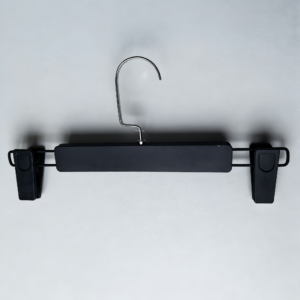
For clip formats, position the garment as it will be displayed and examine the contact areas after handling. A trouser-bar format should be reviewed with the complete outfit if that is the intended use. Use the results to choose the configuration. Load ratings and fabric-marking claims need separate supporting evidence.
Approve branding on the selected hanger
Review logo placement after the body and finish are settled. The available area and appearance depend on that combination. A digital proof can establish artwork, dimensions and position; a decorated sample is useful when the buyer needs to judge the finished mark on the actual surface.
Lelvion’s OEM options vary by model, material, order quantity and project. Send the artwork and preferred result for review instead of assuming that a method shown on one product is available on every coated body.
Keep the approved artwork file with its revision, placement measurements and sample reference. If the body, finish or logo method changes, identify which part of the approval needs to be repeated before proceeding.
Connect sample approval to a written specification
A sample approval should say which features have been accepted and which are still provisional. An undecorated model can settle the basic shape while leaving the logo unresolved. Make that distinction visible in the approval record.
| Specification area | What the buying team should record |
|---|---|
| Body and garment fit | Model, body material, dimensions and garment references reviewed |
| Surface and color | Finish description, physical reference and accepted appearance |
| Hardware | Hook configuration and any bar or clip details |
| Branding | Artwork revision, method, size and position |
| Packing | Proposed pack-out, carton information and unresolved requirements |
Label the sample and keep dated photographs with the specification. Record any difference between the sample and the intended order, along with the person responsible for resolving it. An email approving the color should not leave the supplier guessing whether the same message also accepts a different hook.
Agree how the bulk goods will be assessed, how differences will be recorded and who will review them. Sample approval identifies the reference product; the condition of the bulk order still needs its own review against the agreed requirements.
Include packing in the quotation scope
Request pieces per carton, carton dimensions, gross weight and the proposed arrangement inside the carton. Keep these fields separate from the hanger’s own dimensions. If the shipment includes several colors or models, state whether they must be separated and how carton labels should identify them.
Where surface contact or exposed hardware is a concern, ask the supplier to propose protection and show a packing sample or photographs of the proposed arrangement. Agree on the method before ordering. A product image does not show whether sleeves, separators or other protection are included.
Give the receiving team a chance to review labels and carton identification. Destination-specific labels, barcodes and store allocations belong in the packing instructions when required. If freight is being quoted, identify whether the carton figures are estimates or confirmed for the selected configuration.
Send an RFQ that identifies each order line
Include a garment description, model or drawing, required dimensions, surface and color reference, hardware, branding, quantity by configuration, packing requirements and destination. Mark unresolved choices so the supplier can quote a defined option or explain what still needs development.
Use the same specification revision when requesting comparable quotations. Where one supplier proposes an alternative body, finish or packing arrangement, keep that alternative separate from the requested configuration so the price difference can be understood.