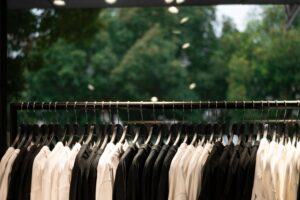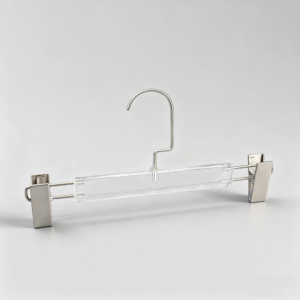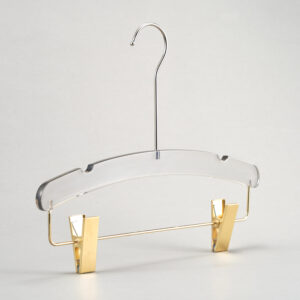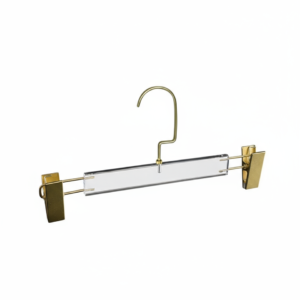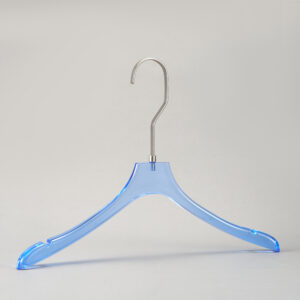
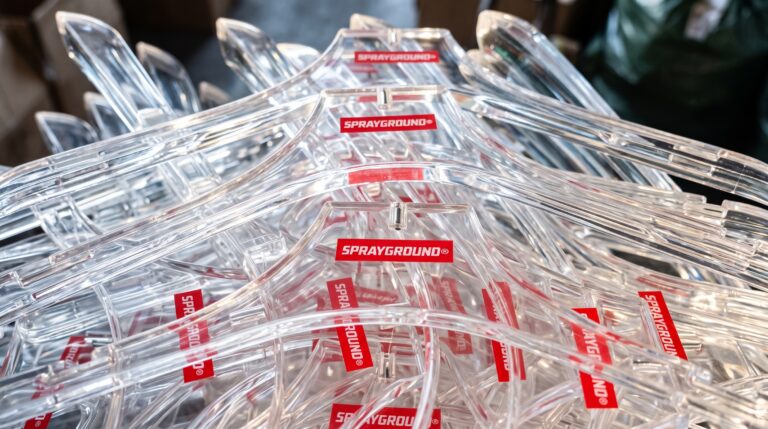
“Custom hanger” can describe very different projects.
For one buyer, it means adding a logo to an existing black hanger. For another, it means changing the body color and hook finish. For another, it means developing a completely new hanger shape.
These projects should not be quoted or managed as though they are the same.
The first decision is therefore not which logo method to use. It is how much of the hanger actually needs to change.
Start With the Base Hanger
Before discussing branding, select the hanger body.
Check the garment category, overall width, shoulder profile and whether the product needs a trouser bar or clips.
If the buyer already has a successful hanger, provide a physical sample or controlled specification. If not, begin with an existing model close to the garment requirement.
The Lelvion product range is organized by rubber coated, clear, PP plastic and wooden hanger categories so buyers can identify a likely base before moving into customization.
Decide Whether You Need Customization or New Product Development
This distinction can save significant time.
A project using an existing body with a custom logo is customization.
An existing body with a different hook finish or body color is also usually a customization question.
A hanger that needs a fundamentally different shoulder geometry, dimensions or body structure may require product development and potentially new tooling.
Do not request a new mold simply because the brand wants a unique-looking hanger. First determine whether the desired result can be achieved through color, finish, hardware and branding on an existing body.
Define the Body Color Separately From the Surface Finish
Color and finish are different specifications.
For example, “black” describes color but does not tell the supplier whether the buyer expects a standard molded surface, a rubber coating or another confirmed treatment.
Record both.
If a custom brand color matters, use an agreed color reference and approve the physical result on the selected hanger. Screen appearance can differ from the finished material and surface.
Choose the Hook and Visible Hardware With the Body
The hook can change the overall presentation significantly.
Confirm the hook type, visible finish and any height or orientation requirement relevant to the selected model and store fixture.
If clips, bars or other metal parts are visible, include them in the same review.
A custom hanger should look intentional as a complete object. The body, hardware and logo should not be selected independently and combined only at the end.
Choose the Logo Method After the Body Is Confirmed
Logo methods depend on the hanger material, surface and available branding area.
Possible options on selected Lelvion models include processes such as screen printing, laser engraving or applied metal nameplates. Availability should be confirmed for the exact model rather than copied from another product page.
The Lelvion OEM page should be used as the commercial starting point for confirming which customization methods are available on the shortlisted hanger.
Do not write the specification as simply “custom logo.”
Record:
- artwork file;
- logo method;
- size;
- position;
- color or finish;
- orientation.
Review Logo Visibility on a Garment, Not an Empty Hanger Only
A logo can look balanced on an empty product photo and disappear once the garment is loaded.
Decide what the brand actually wants.
Should the logo be visible on the rail? Should it become visible only when the garment is removed? Is the hanger mainly a functional carrier with subtle branding, or is the branding intended to be part of the store presentation?
There is no universal correct answer.
Approve the logo in the context in which the hanger will be used.
Treat Artwork Approval and Sample Approval as Different Steps
Artwork approval confirms the graphic.
A decorated sample confirms how that graphic appears on the actual hanger.
Both matter.
A buyer can approve the file and still reject the finished result because the logo is too large, sits poorly on the body or interacts badly with the surface.
Keep the approved artwork version with the final product specification.
Decide Packaging After the Final Surface Is Known
A basic molded hanger and a decorated rubber coated hanger may not need the same protection.
Once the finished product is approved, confirm the pack-out.
Record pieces per carton, inner protection where required, carton dimensions, gross weight and carton marks.
If the custom hanger will be distributed across many stores, consider whether the carton configuration also needs to fit the buyer’s receiving and replenishment process.
Know When a New Mold Is Actually Necessary
A new body may be justified when the garment fit, shoulder profile, dimensions or proprietary design cannot be achieved with a suitable existing mold.
Before proceeding, define:
- target dimensions;
- garment use;
- visible design requirement;
- technical drawing responsibility;
- sample / prototype path;
- tooling commercial terms;
- ownership or control of the tool under the agreement;
- change process before final approval.
This is a product-development project and should be treated differently from logo printing.
Build a One-Page Customization Brief
A useful RFQ can fit on one page:
| Field | Buyer requirement |
|---|---|
| Garment category | |
| Base hanger / reference | |
| Dimensions | |
| Body material | |
| Body color | |
| Surface finish | |
| Hook / clips | |
| Logo method | |
| Artwork | |
| Logo size / position | |
| Quantity by variant | |
| Packing | |
| Destination |
The supplier can then identify which fields are standard, which are customizable and which require development.
Customization Should Reduce Ambiguity, Not Add It
A branded hanger program succeeds when the approved product is easy to describe and reproduce.
The objective is not to add every possible custom feature. It is to choose the features that matter to the garment and brand, approve them on a representative sample and record them clearly.
Buyers who want to develop a Lelvion branded program can review OEM and customization options, select a base from the product range and send the artwork, quantity and customization brief through the contact page.