
Finding companies that sell garment hangers in China is easy. Finding one that fits a particular order takes more work.
A legitimate supplier can still be the wrong supplier because its molds, materials, hanger types, order structure or customization capabilities do not match what the buyer needs. Supplier search therefore works better when the product is defined before the factory is judged.
Define the Order Before Searching for Suppliers
Prepare a short sourcing brief first. At minimum, record:
- garment category;
- hanger type;
- approximate dimensions if known;
- material or surface requirement;
- hook, bar or clip configuration;
- logo requirement;
- estimated quantity;
- model and color split;
- destination;
- whether an existing hanger must be matched.
A request for “20,000 black rubber coated women’s hangers with a silver hook and printed logo” immediately narrows the search more effectively than “best hanger factory China.”
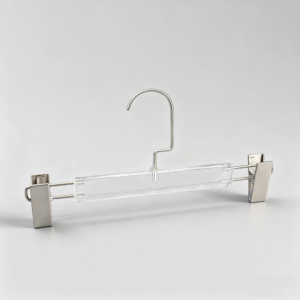
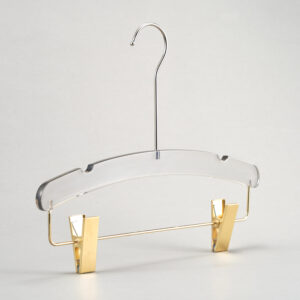
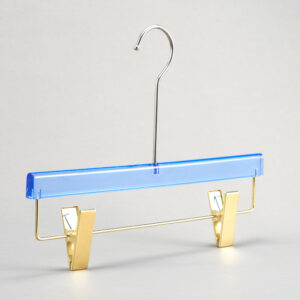
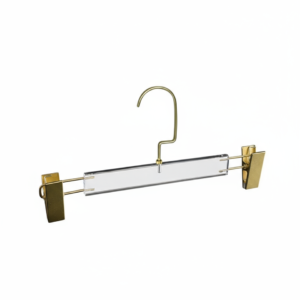
If the base product is not decided yet, review the Lelvion product categories as an example of how commercial hanger families can be separated by application and construction.
Screen Product Relevance Before Factory Claims
Look at what the supplier appears to make regularly.
A company showing mostly wire household hangers may not be the most efficient starting point for a branded rubber coated program. A supplier focused on wooden hotel hangers may not be the right first choice for a molded PP retail project.
Useful early evidence includes:
- hanger bodies close to the required shape;
- relevant hooks, bars or clips;
- appropriate surfaces or finishes;
- dimensions that make sense for the garment category;
- customization examples that are relevant to the order.
The supplier does not need to have the exact final product online. It should, however, be able to show a credible route from an existing capability to the requested item.
Ask About Existing Models Before New Tooling
Many branded hanger projects do not need a completely new body.
The customization may be limited to color, surface finish, hook finish, logo or packaging. If an existing model is close to the garment requirement, using that body can reduce unnecessary development work.
Ask the supplier for the closest model and its dimensions. Compare it with the garment or current hanger. Only discuss a new mold when the shape itself genuinely needs to change.
For buyers whose main requirement is branding rather than a new body, the Lelvion OEM page shows the distinction between product selection and customization.
Manufacturer or Trading Company Is Not the First Filter
“Factory good, trading company bad” is too simplistic.
A trading company may provide sourcing and consolidation services. A manufacturer may offer more direct access to production. Either can be suitable depending on the order.
The useful question is: who actually controls the product being purchased, and who is contractually responsible for delivering it?
If direct manufacturing is a requirement, verify it. If part of the work is subcontracted, ask which part. Injection molding, metal components, coating, printing and packaging do not necessarily have to happen in the same building.
Visibility is more useful than labels.
Review Company Information Once the Product Looks Relevant
After product screening, check the business entity behind the quotation.
The legal company name on the quotation, contract, invoice and payment information should make sense together. A registered address and a production address can legitimately be different, so the purpose is not to reject every difference. The purpose is to understand the transaction before money is sent.
For a larger order, this is also the stage to prepare for a deeper supplier verification. Lelvion’s guide on verifying a Chinese clothing hanger factory covers that process separately.
Judge Product Specificity, Not Website Size
A polished website is not proof of manufacturing capability. A modest website is not proof of the opposite.
The more useful signals are specific product information: identifiable models, dimensions, materials, hooks, clips, visible differences between designs and clear customization boundaries.
A site filled only with claims such as “high quality,” “best price” and “professional service” gives a buyer little to compare.
Product detail is more useful than marketing volume.
Send a First Inquiry That Can Be Answered
Avoid messages such as:
Please send catalogue and best price.
A supplier can only respond generically.
A stronger first inquiry is still short:
We are sourcing approximately 20,000 hangers for women’s dresses. We need a black rubberized finish, silver hook and one-color logo. Please recommend your closest existing model and provide dimensions, available logo method, MOQ structure, sample arrangement and indicative packing.
This message allows the buyer to judge the response itself.
Did the supplier identify a relevant model? Did it provide dimensions? Did it distinguish standard and customized requirements? Did it identify missing information instead of guessing?
Those are useful early screening signals.
Use the First Response to Build a Shortlist
A simple table is enough:
| Item | Supplier A | Supplier B | Supplier C |
|---|---|---|---|
| Relevant model identified | |||
| Dimensions supplied | |||
| Material stated | |||
| MOQ explained | |||
| Logo method confirmed | |||
| Sample process explained | |||
| Packing information available | |||
| Missing requirements identified |
This is more useful than ranking suppliers from a single unit price.
Compare the Same Product Before Comparing Prices
Supplier A may quote a plain standard hanger. Supplier B may quote a custom color, branded body and different packing. Those prices are not directly comparable.
Before choosing a shortlist, normalize the model, dimensions, material, finish, hardware, logo, quantity, packing and trade term.
The separate guide on comparing clothing hanger suppliers provides a more detailed comparison structure once several quotations are in hand.
Samples Turn a Supplier Search Into a Product Decision
Catalogues identify candidates. Samples show what is actually being proposed.
Put the sample on the intended garment. Check width, shoulder shape, surface, hook or clips and branding. If the order includes several garment types, test more than one representative item.
For a custom-logo project, it can be efficient to approve the base hanger before spending time on decorated samples.
The sample should correspond to the quotation. If the quoted model and sampled model are different, resolve the difference before moving forward.
Ask How the Sample Becomes the Production Specification
A useful supplier should be able to turn the approved sample into an order record covering model, dimensions, material, color, finish, hardware, artwork, logo position, quantity and packing.
The process does not need to be complicated. It needs to be clear enough that the order can be understood without depending on one salesperson’s memory.
Narrow the List Before Detailed Factory Verification
There is little value in auditing ten companies that do not have the right product.
A practical sequence is:
- product relevance;
- commercial response;
- sample;
- company and factory verification;
- final supplier comparison.
By the time detailed verification begins, the list should already be small.
Where Lelvion Fits
Lelvion is a China-based garment hanger manufacturer supplying plastic, rubber coated, crystal-clear and selected wooden hanger programs for B2B buyers. The current range can be reviewed on the product page, while customization options are outlined on the OEM page.
For a live project, the most useful inquiry is a defined one: send the hanger reference or garment category, quantity, color, hook, logo and packing requirement through the contact page. That allows the discussion to begin with a real model and sample path rather than a generic factory introduction.