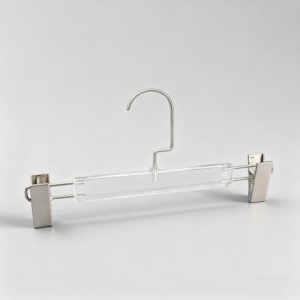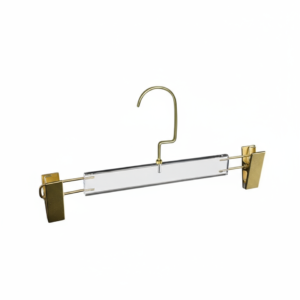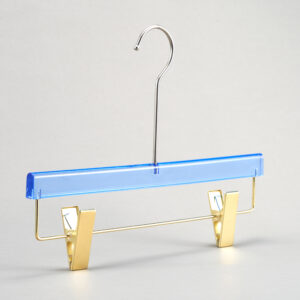

A hanger quotation is the price of a specific configuration at a specific quantity under specific commercial conditions.
Change the body, color, hook, logo, quantity split or packing and the quote may change too.
That is why asking “What is your hanger MOQ?” or “What is your best price?” often produces an answer that is too general to use.
The useful question is: What is the MOQ and price basis for this exact configuration?
Start With the Base Hanger
The first distinction is whether the buyer is using an existing model or developing a new body.
An existing hanger from a supplier’s normal range already has a defined mold and general production route. A completely new shape introduces development and tooling questions before normal unit pricing can be compared.
For many retail programs, the most efficient starting point is to shortlist an existing body from the Lelvion hanger range and then define color, hook, logo and packing.
Only move to new-product development when the existing geometry cannot meet the garment or design requirement.
MOQ Usually Belongs to a Configuration
The total PO quantity can hide several smaller production quantities.
A 20,000-piece order may contain:
- 5,000 black / silver hook;
- 5,000 black / gold hook;
- 5,000 beige / silver hook;
- 5,000 beige / gold hook.
The supplier may need to evaluate each combination separately because color, component or decoration changes can create additional setup.
Before negotiating the MOQ, show the SKU breakdown.
Body Color Can Affect the Production Plan
Custom color is not just a marketing field.
It may require a separate material or coating preparation, a color reference and an approval step. The effect on MOQ and price depends on the selected hanger and manufacturing route.
Do not assume a custom color carries the same conditions as a stock color.
Ask the supplier to state the quotation basis for the chosen model.
Hooks, Clips and Bars Change More Than Appearance
A hook color or type can introduce another component variant.
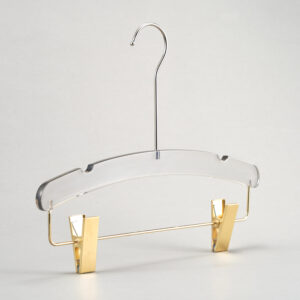
A trouser bar or clip system can change assembly and packing. If a buyer needs a particular metal finish, that requirement should be included before the quote is compared.
Two hangers that share the same plastic body may therefore have different final costs.
Logo Method Matters
Printing, engraving and applied logo components are different processes.
The selected method can affect sample work, setup and unit cost. The available method also depends on the hanger body and finish.
A buyer should not request “logo included” as though decoration were one universal service.
Confirm the method, artwork, size, position and number of colors where relevant. The Lelvion OEM page provides a practical list of customization fields to define before requesting the final quote.
Packing Can Change the Quote and the Landed Cost
A basic bulk carton and a protected retail-sensitive pack are not equivalent.
Packing may include different quantities per carton, dividers, bags, protective material or carton specifications. These choices affect both factory cost and shipping volume.
Before selecting a supplier on unit price, confirm what packing is included.
If the freight is important, request carton dimensions and gross weight as well.
New Tooling Should Be Quoted Separately Enough to Understand
A new hanger shape can require tooling or mold work. The commercial arrangement varies by project.
The buyer should understand:
- what the tooling charge covers;
- whether it is paid separately or built into another price;
- who owns or controls the tool under the agreement;
- what changes are included before final approval;
- whether the quoted production price assumes a particular order volume.
Do not assume every custom hanger project needs a new mold. A custom logo or color on an existing hanger is a different type of project.
Larger Quantity Does Not Guarantee a Fixed Discount Curve
A supplier may be able to quote better at higher quantity because setup or fixed costs are spread across more units. But the relationship is not a universal percentage.
Material, SKU mix, packaging, production schedule and secondary operations still matter.
Instead of asking for a theoretical discount formula, request price tiers for the actual configuration if different order volumes are genuinely under consideration.
For example:
| Quantity scenario | Same specification? | Supplier quote |
|---|---|---|
| 10,000 | Yes | |
| 25,000 | Yes | |
| 50,000 | Yes | |
| 100,000 | Yes |
The key phrase is same specification.
Mixed Models Need Separate Calculation
Combining several hanger models in one purchase order does not necessarily mean the factory can treat them as one production run.
If the buyer wants mixed models, provide the quantity by model and ask whether any commercial benefit comes from placing them together.
Do not assume the total automatically satisfies the MOQ for every component.
A Quote Request Should Contain the Inputs That Change Price
A practical RFQ includes:
- hanger model or reference;
- body material where fixed;
- body color / finish;
- hook, clips or bar;
- logo method or artwork;
- quantity by SKU;
- packing requirement;
- destination and requested trade term where relevant;
- sample requirement.
This produces a much more useful quotation than “price for 10,000 plastic hangers.”
Compare Quotes After Normalizing the Inputs
If Supplier A and Supplier B have different prices, first look for differences in specification and commercial basis.
Use the supplier comparison guide to normalize material, hardware, logo, packing, quantity and trade term before concluding that one factory is more expensive.
If the order is already very large, the 50,000–100,000 piece planning guide helps connect MOQ decisions to SKU planning and shipment data.
For a Lelvion quotation, send the closest product model, quantity by variant, customization fields and packing expectations through the contact page. A precise input is the fastest way to make the price meaningful.