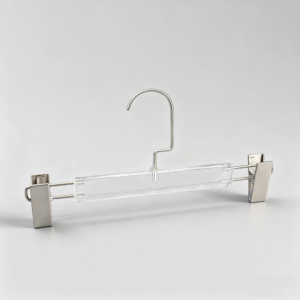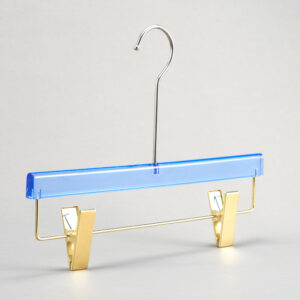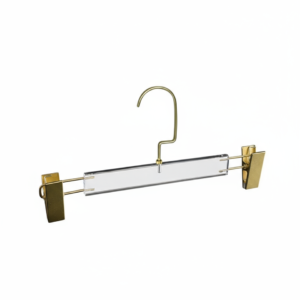

Changing hanger suppliers is not just a sourcing exercise. It is a specification-transfer exercise.
If the outgoing supplier holds most of the product knowledge in email threads, physical samples or undocumented production habits, a replacement supplier can produce a hanger that looks similar while differing in dimensions, material, hook, finish, logo placement or packing.
The safest transition starts by rebuilding the product specification before the old supply is switched off.
Write Down Why the Supplier Is Being Replaced
Define the problem before searching for a replacement.
Examples might include:
- repeated delivery problems;
- poor communication;
- price no longer fits the program;
- a customization need the current supplier cannot support;
- inconsistent product versus the approved specification;
- the business wants a second source rather than a complete replacement.
This matters because the new supplier should be evaluated against the problem being solved.
If the issue is delivery reliability, choosing a new factory only because it is cheaper may not solve anything. If the issue is a hanger that no longer fits the garment range, copying the old product perfectly may also be the wrong goal.
Reconstruct the Existing Hanger Specification
Do not begin with “make the same hanger as this photo.”
Create a transfer file covering:
| Field | Existing approved requirement |
|---|---|
| Hanger model / reference | |
| Overall dimensions | |
| Body material | |
| Body color / finish | |
| Hook | |
| Clips / bar | |
| Logo artwork | |
| Logo size and position | |
| Packing | |
| Carton marking | |
| Current sample reference |
A physical sample is extremely useful, but the written record protects the buyer from copying an undocumented defect or overlooking a detail that is hard to see.
Decide What Must Stay the Same
A supplier change is an opportunity to improve the product, but changing too many variables at once makes comparison difficult.
Split the specification into two groups.
Locked: features that must remain compatible with the current retail or apparel program.
Open: features that may be improved, simplified or re-quoted.
For example, the body dimensions and logo position may be locked while the carton configuration is open for review.
This gives the new supplier room to contribute without turning the transition into an uncontrolled redesign.
Send the Same Transfer Pack to Shortlisted Suppliers
Do not brief each replacement candidate differently.
Use the same sample, specification and commercial requirements so quotations can be compared on the same basis.
If the replacement does not need to reproduce the existing hanger exactly, state which deviations are acceptable.
The supplier comparison guide is useful at this stage because the lowest unit price may represent a different product or packing basis.
Approve the Base Hanger Before Decoration Where Possible
If the body itself is changing, verify fit first.
Put the replacement sample on the same representative garments used with the current hanger. Check shoulder position, slippage, clip function, hook fit and the way the garment sits on the rail.
Only after the body is acceptable should the project move to final decoration if the logo work is substantial.
That sequence avoids approving beautiful branding on the wrong hanger.
Compare Old and New Samples Side by Side
A side-by-side review should focus on the attributes that matter to the program.
Do not ask whether the samples “feel similar.” Record differences.
For example:
- new hanger is 5 mm narrower;
- hook height differs;
- shoulder end shape is rounder;
- logo sits 3 mm lower;
- clip opening is different;
- carton pack-out changes.
Some differences may be acceptable or even beneficial. The important thing is that they are known before the first bulk order.
Plan Inventory During the Changeover
Supplier transition risk is often an inventory problem rather than a manufacturing problem.
The buyer should know:
- how much approved stock remains;
- when the outgoing supplier’s final shipment is expected;
- when the new supplier’s sample will be approved;
- when the first new production order is expected to ship;
- what buffer is needed if the first order is delayed or requires correction.
Do not cancel a working supply source before the replacement product is qualified unless there is no alternative.
For large programs, a controlled overlap can be safer than a hard cutover.
Transfer Artwork as Source Files, Not Screenshots
If the hanger is branded, the buyer should hold the approved artwork.
Provide the replacement supplier with the correct source file or production-ready artwork, not a screenshot copied from an old email.
Record the final logo size, position, method and visible finish. If the old supplier created tooling or plates, confirm whether those assets belong to the buyer and whether they can actually be transferred.
The Lelvion OEM page can be used as a checklist of the customization fields that should be defined when a branded hanger moves to a new production source.
Rebuild Packing Information
A supplier change can alter shipment volume even when the hanger itself remains similar.
Confirm pieces per carton, carton dimensions, gross weight and any inner protection with the new supplier. Recalculate freight if the pack-out changes.
Do not assume the old shipping cost still applies.
Define the Approval Point for the New Supplier
A new supplier should not become “approved” because a quotation was accepted.
Define the point clearly. For example:
- company verification complete;
- base sample approved;
- decorated sample approved;
- final specification signed off;
- packing confirmed;
- first production order accepted under the buyer’s normal inspection process.
The exact process depends on the business, but the transition should have a known finish line.
Keep the Old and New Specifications During the First Order
For the first replacement shipment, keep both references available.
This makes it easier to identify whether a difference is intentional or a production issue. Once the new hanger is accepted, update the master file so future reorders do not depend on the old supplier’s product.
A Supplier Change Should Leave the Buyer With Better Documentation
Even if the old supply relationship was informal, the new one does not have to be.
The transition is a good time to consolidate model, dimensions, material, color, hardware, artwork and packing into one controlled record.
If you are replacing an existing supplier with Lelvion, send the current hanger sample or specification together with the garment category, quantity and the fields that must remain unchanged through the contact page. Existing alternatives can be reviewed first in the Lelvion product range, while branded or modified programs can be discussed through OEM customization.