
A supplier may describe a hanger as “virgin PP,” “recycled plastic,” “PCR plastic,” or simply “PP.” Those descriptions are not interchangeable. If material origin matters to the order, the buyer needs to know what part of the hanger the claim covers, what requirement will be written into the purchase specification, and what evidence is expected before production.
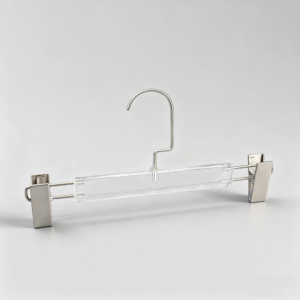
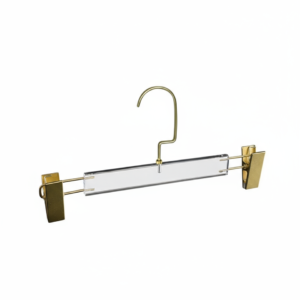
A finished sample is still important, but it answers a different question. It can show whether the hanger has the right dimensions, color, surface, hook, clips and garment fit. It cannot, by appearance alone, reliably reconstruct where the resin came from.
First Decide Why Material Origin Matters
The required level of verification depends on the project.
If a buyer simply needs a PP hanger that matches an existing approved item, the main task is to record the agreed polymer and make sure production follows the same specification.
If a retailer requires a defined recycled-content percentage, the scope becomes more precise. The buyer needs to know whether the percentage applies to the plastic body only or to some other defined component.
If the material statement will later appear in sustainability reporting, customer documentation or public marketing, the evidence requirement may be higher again.
This distinction matters because asking every supplier for every possible certificate does not automatically improve the purchase. Start with the claim that actually needs to be supported.
Separate the Hanger Body From the Complete Hanger
A commercial hanger may contain several materials. A plastic body can be combined with a metal hook, springs, clips, pads, coatings or applied logo components. Packaging is another separate material system.
That means a statement such as “30% recycled content” is incomplete until the buyer knows what the percentage applies to.
A simple purchase record can separate the components:
| Component | What to record |
|---|---|
| Hanger body | Polymer and any material-origin requirement |
| Hook | Material and visible finish |
| Clips / springs | Construction where relevant |
| Coating | Surface treatment if used |
| Logo component | Printing, engraving or applied part |
| Packaging | Inner and outer packaging separately |
ISO 14021 distinguishes recycled-content claims at the level of a product, component or packaging. That is a useful discipline for hanger sourcing because it prevents a claim about one part from being applied automatically to the whole finished item.
What a Finished Sample Can Tell You
A sample can confirm many things that matter commercially.
You can approve the hanger width and shoulder shape. You can compare the body color with a reference. You can inspect surface consistency. You can check the hook, clips and logo. You can put an actual garment on the sample and decide whether the finished product is suitable for the intended use.
Those are valid sample checks.
They are different from proving material origin.
Color Is Not Proof of Resin Origin
Dark material is not automatically recycled, and a bright or transparent product is not automatically virgin. Pigments, masterbatch, additives and processing choices affect appearance.
Use color to approve color.
Do not use it as a stand-alone test for recycled content.
Surface Appearance Is a Product Check
A buyer can reject visible defects or an unacceptable finish. That does not mean a smooth or glossy surface proves a particular resin history.
Smell Is Not a Reliable Purchasing Test
An unusual odor may justify further questions, but a subjective smell test cannot establish a recycled-content percentage or prove virgin material.
Bending the Hanger Tests the Hanger
Flexing or loading a sample can help the buyer judge finished-product behavior. That behavior depends on material, grade, geometry, wall thickness, ribs and other design choices. It should not be presented as a method for determining resin origin.
Ask the Supplier to State the Material Requirement Clearly
When material matters, turn the discussion into a written field in the order.
For example:
Hanger body polymer: PP
Material-origin requirement: buyer-defined if applicable
Recycled-content requirement: buyer-defined if applicable
Claim scope: hanger body / specified component
Color: approved reference
Sample: approved model and configuration
Supporting documentation: stated before production
This is more useful than asking whether the supplier uses “good plastic.”
If you are still deciding between polymer families, the separate Lelvion guide on PP, PS and ABS hanger selection should be used first. Material family and recycled-content claims are related questions, but they are not the same decision.
Define Any Recycled Percentage Before the PO
If a retailer requires a specific percentage, write the percentage and its scope into the specification before production.
Do not leave a statement such as “contains recycled plastic” open to interpretation.
Where the distinction matters to the buyer, also clarify whether the program requires post-consumer recycled material, pre-consumer recycled material, or another defined category. The exact terminology should follow the buyer’s own policy or applicable standard rather than wording invented during supplier negotiation.
Do Not Collect Documents Without Knowing Their Purpose
Different documents answer different questions.
A technical data sheet describes a material grade. A supplier declaration records what the supplier states it will use. A certification under a particular scheme may address a defined sourcing or chain-of-custody claim. A laboratory test may measure a physical or chemical characteristic.
One document should not be treated as proof of every claim.
Before requesting paperwork, ask: what decision will this document allow us to make?
For an ordinary commercial hanger order, a clear specification and approved sample may be the main controls. A formal recycled-content program may need additional evidence. The requirement should match the risk and the way the claim will be used.
Laboratory Testing Also Has Limits
Testing can be valuable when there is a defined property to measure. It does not mean every aspect of a material’s sourcing history can be reconstructed from a finished hanger.
If recycled origin is contractually important, the buyer should plan the documentation and traceability requirement before production rather than assume that a finished-product test can settle the question afterward.
Virgin Does Not Automatically Mean Better
“Virgin” describes material origin. It does not, by itself, prove that a finished hanger is better for every garment application.
The hanger still needs the right body design, resin grade, dimensions, hook or clips, finish and production consistency.
The same principle applies in the other direction. The word “recycled” does not automatically make a hanger unsuitable. The buyer needs to evaluate the actual material requirement and the finished product separately.
Recycled Does Not Automatically Mean Sustainable
Recycled content is one environmental attribute. It should not be expanded into a broad “eco-friendly” claim without evidence for the broader statement.
For buyers working on environmental requirements, Lelvion’s separate guide to sustainable hanger procurement addresses recycled content, recyclability, reuse, packaging and claim scope as separate purchasing questions.
Keep the Material Record With the Approved Sample
A useful purchase file connects what can be seen with what cannot.
Record the model, dimensions, polymer, material-origin requirement where applicable, body color, hook or clip configuration, logo, packaging and sample reference in one place.
If the buyer later reorders the same hanger, that record becomes the starting point. If the material requirement changes, treat it as a specification change rather than assuming the new version is equivalent.
A Practical RFQ Wording
A buyer can keep the first request simple:
Please quote the attached hanger configuration and state the polymer proposed for the hanger body. If recycled content is offered or required, specify the percentage, the component to which the percentage applies, and the supporting documentation available. The final material requirement will be recorded together with the approved sample before production.
That wording gives the supplier something concrete to answer without pretending the buyer already knows which evidence will be appropriate.
If you are preparing a live project, start from the closest model in the Lelvion garment hanger range, then send the model, garment use, quantity and material requirement through the contact page. The material conversation is most useful when it is tied to a defined hanger rather than discussed in isolation.