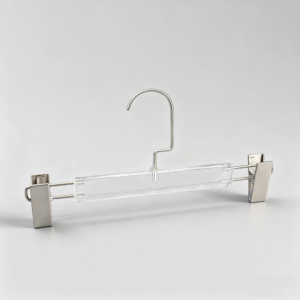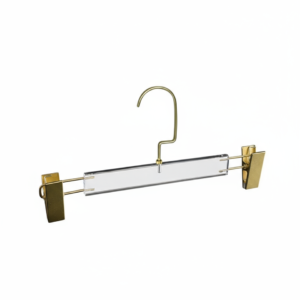
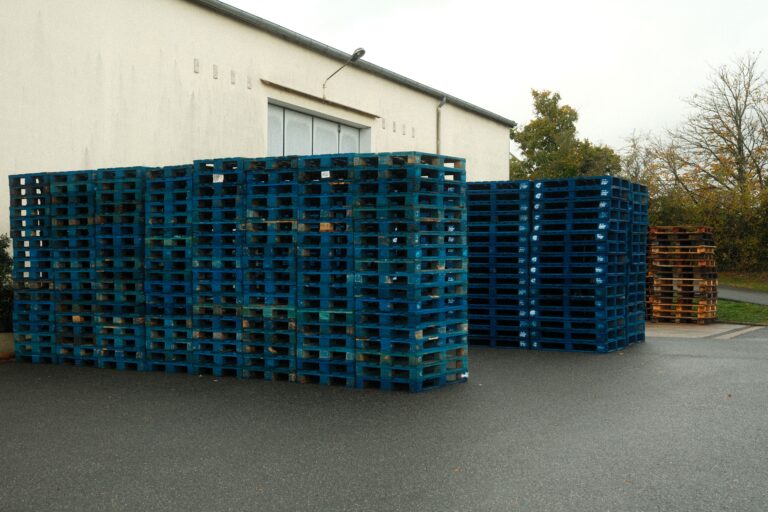
An order of 50,000 or 100,000 hangers should not be managed as one large number.
The practical work happens at SKU level: which models, colors, hooks, logos and cartons make up the total order, and which of those variants need separate approval or production handling.
The quantity itself does not create a standard process. A 100,000-piece order of one existing model can be simpler than a 50,000-piece order divided across many customized variants.
Build the SKU Map First
Before asking for a final quote, split the order into real production variants.
For example:
| SKU | Model | Color | Hook | Logo | Quantity |
|---|---|---|---|---|---|
| A | Top hanger | Black | Silver | Brand A | 25,000 |
| B | Top hanger | Beige | Gold | Brand A | 15,000 |
| C | Clip hanger | Black | Silver | Brand A | 10,000 |
| D | Top hanger | Black | Silver | Brand B | 20,000 |
This table immediately exposes questions that the total quantity hides.
Does each variant meet the supplier’s production minimum? Which variants share the same body? Which require different decoration? Can they use the same carton? Which samples are actually needed?
Finalize the Product Basis Before Negotiating the Last Cent
A large order magnifies small specification differences.
Record the body model, dimensions, material, color, surface finish, hook or clips, logo and packing basis before using two quotations to negotiate against each other.
The same principle applies whether the hanger is selected from an existing Lelvion product category or developed through an OEM project.
A cheaper quote for a lighter or different hanger is not evidence that the same product is cheaper.
Decide Which SKUs Need Samples
Not every variant always requires a completely separate full approval process.
If several SKUs share the same hanger body and only the carton mark changes, the buyer may decide the product sample can be common while packing is confirmed separately.
If the body color, surface finish, hook, clips or logo changes in a way that affects the finished product, a separate sample may be justified.
Create a sample matrix instead of ordering samples randomly.
| SKU difference | Separate sample needed? | Buyer decision |
|---|---|---|
| New hanger body | Usually important to test | |
| New body color | Visual approval may be required | |
| New logo | Decoration approval may be required | |
| Carton mark only | Product sample may not change | |
| New hook / clip | Functional and visual check may be required |
The buyer should decide according to the project rather than follow a universal rule.
Keep Approval Milestones Visible
A practical order schedule can be built around events rather than one promised lead-time number.
Typical events are:
- commercial terms agreed;
- final specification issued;
- artwork approved;
- samples approved;
- production slot confirmed;
- production completed;
- packing completed;
- shipment handed over.
The sequence can vary. What matters is knowing which event depends on the buyer and which depends on the supplier.
If artwork approval is two weeks late, the production schedule may move. A timeline should make that dependency visible.
Confirm Packing Before Freight Is Finalized
For high-volume hanger orders, carton data is essential.
Request:
- pieces per carton;
- carton dimensions;
- gross weight;
- carton count by SKU;
- any inner protection;
- pallet requirements if applicable;
- carton labels and marks.
Do not estimate freight from hanger count alone.
Hangers can consume significant shipment volume, and two pack-outs for the same quantity can create different logistics costs.
Review Packing Against the Product Finish
The most compact pack is not automatically the best pack.
A rubberized surface, clear body, decorated logo or visible metal part may require a different protection method from a basic molded PP hanger.
The buyer should approve a pack-out that balances protection, handling and shipping efficiency.
If the supplier proposes a packing change to save space, review the effect on the actual finished hanger before accepting it.
Choose the Trade Term Deliberately
International quotations often use Incoterms® rules such as EXW, FCA, FOB, CIF or DDP. These terms allocate specific tasks, costs and risks between seller and buyer.
Do not compare an EXW price directly with a CIF price and call the difference “supplier margin.” They cover different responsibilities.
For containerized shipments, buyers should also understand that the ICC guidance distinguishes between FOB and FCA depending on how the goods are handed over. The appropriate term should reflect the actual transaction rather than habit.
If your logistics team manages international freight, include them before the final PO instead of asking them to interpret a completed supplier agreement afterward.
Build the Freight Calculation From Carton Data
Once the final pack-out is available, the logistics comparison can use real inputs.
At minimum, keep:
- total cartons;
- total gross weight;
- total cubic volume;
- pickup / handover location;
- destination;
- trade term.
These figures also help the buyer estimate warehouse space and receiving workload.
If the supplier changes pieces per carton after the order is placed, update the logistics calculation.
Keep One Master Order File
A large order should not depend on a chain of scattered emails.
The master file should identify:
- approved product specification;
- SKU table;
- artwork files;
- color references;
- sample approvals;
- packing table;
- quantity allocation;
- shipment information;
- any inspection requirement.
The supplier can maintain its own production records, but the buyer should also retain the approved master version.
Plan the Reorder During the First Order
If the hanger is likely to be reordered, organize the first order so the second one can begin from a controlled reference.
Keep the final sample, specification, artwork and packing data. Record any change that happened during production.
A reorder should start by asking:
What has changed since the approved version?
not:
Can you make the same as last time?
Use Quantity to Improve Planning, Not to Create False Certainty
Large volume does not automatically produce a lower total cost, shorter lead time or better quality. Those outcomes depend on the product, SKU structure, production route, packing and commercial arrangement.
The value of planning a 50,000–100,000 piece order is that the buyer can expose those variables before they become expensive.
If you are preparing a large Lelvion order, identify the closest model in the hanger range and send the SKU table, customization fields, quantity and destination through the contact page. For evaluating the supplier itself at this scale, use the separate large-volume supplier guide.