A premium retail hanger is not defined by one material, one color or one decorative feature.
The hanger has to support the garment correctly and fit the visual system around it: rail, lighting, fixtures, hardware, spacing and branding.
That makes “premium” a poor technical specification.
A useful brief describes the garment and the visible details the retail team wants to control.
Start With the Garment Silhouette
The hanger should support the clothing before it contributes to the visual presentation.
Put the garment on the proposed body and check:
- shoulder position;
- how the garment falls from the hanger;
- neckline stability;
- whether straps or smooth fabrics slip;
- whether a structured shoulder keeps its intended form.
A hanger that looks impressive empty can still be wrong once the garment is loaded.
For a mixed collection, do not approve the body using only the easiest garment. Test representative items that expose fit problems.
Decide What Should Be Consistent Across the Collection
Premium presentation often depends on consistency more than ornament.
The retail team may choose to standardize:
- visible body color;
- hook finish;
- hook height;
- logo treatment;
- hanger family;
- shoulder profile within a garment category.
That does not mean every garment has to use the same body.
A jacket and a skirt may require different structures while still sharing a coordinated visual language.
The goal is a controlled system, not one universal hanger.
Match the Shoulder Profile to the Clothing
For shirts and lighter garments, a slim profile may be appropriate if it supports the shoulder correctly.
Structured jackets may need a broader or more shaped support area.
Wide-neck or smooth garments may need more grip or a retention feature.
Avoid writing “luxury hanger = thick hanger.” Thickness should follow garment needs and the desired rack density rather than a prestige rule.
Coordinate Body Finish and Hardware
The visible body and metal components are seen together.
Review body color, surface, hook finish and clips under the same conditions in which the store will use them.
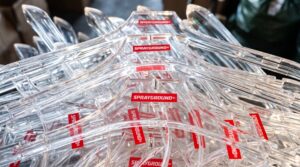
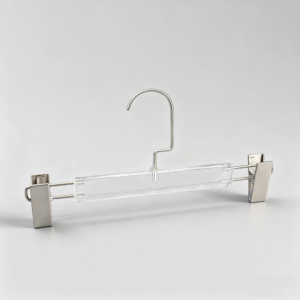
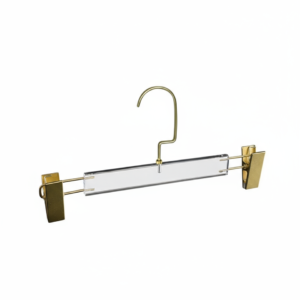
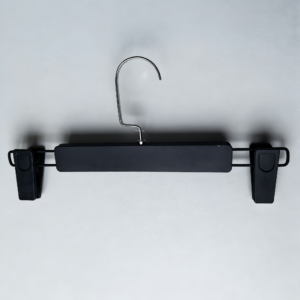
A matte black body with a bright metal hook creates a different visual result from a clear body with the same hook. Neither is inherently more premium.
The combination should support the store’s existing material palette and fixtures.
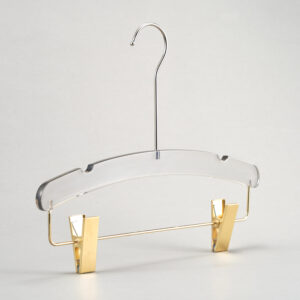
Lelvion buyers can compare different visual starting points across rubber coated hangers, crystal-clear hangers and other commercial hanger categories.
Decide How Visible the Logo Should Be
Branding can be prominent, subtle or absent.
The right choice depends on the program.
Ask:
- Is the hanger logo intended to be visible with the garment on the rail?
- Is the branding mainly for staff, photography or customer take-home?
- Does the logo compete with the garment neckline or label?
- Should every hanger in the store use the same treatment?
Once the objective is clear, choose a method supported by the selected hanger and approve the actual decorated sample.
The OEM page can be used to define color, logo, hardware and packaging as separate customization fields instead of treating “premium branding” as one vague request.
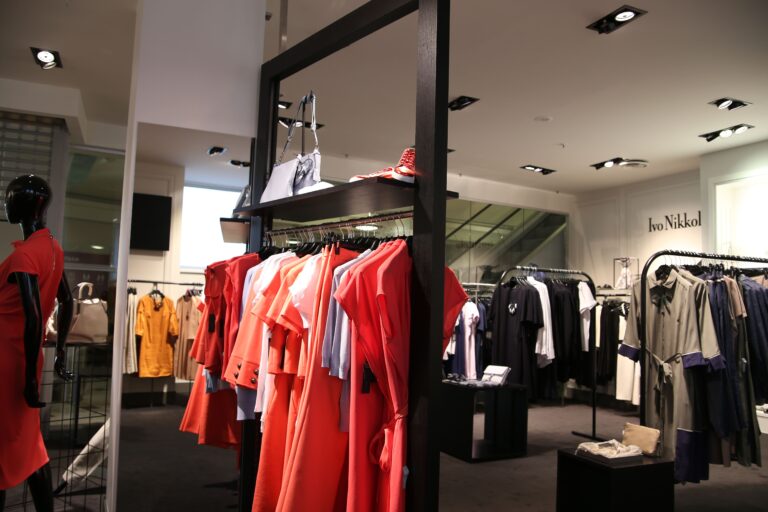
Test Under Store Lighting
Color and surface can look different under retail lighting than they do in an office or on a laptop screen.
Before a large rollout, review the sample in lighting similar to the intended store environment.
Look at the hanger both empty and behind the garment.
Does the body disappear as intended, frame the garment, or draw too much attention? Does the metal finish work with the fixture? Is the logo still legible at normal viewing distance?
These are observational decisions. They do not need invented claims about shopper psychology or sales uplift.
Include Staff Handling in the Approval
Store staff may handle a hanger many times during replenishment, fitting-room recovery and merchandising changes.
Ask staff or the project team to load and unload representative garments.
Check whether the hook, clips, surface and overall shape are practical to use.
A presentation product that is difficult to handle can create unnecessary operational friction.
Review Rack Density With the Actual Hanger
A thicker profile can reduce the number of garments that fit comfortably on a rail. A slimmer body can increase density but may not suit every garment.
Do not decide spacing using empty hangers only.
The article on garment hanger spacing and rack density provides a practical test using the garment, hanger and fixture together.
Record the Visual Standard as a Purchasing Specification
Once the retail team approves the look, procurement needs a record that can be reordered.
Keep:
- hanger model;
- relevant dimensions;
- garment category;
- body color and finish;
- hook / clip configuration;
- logo artwork, method and position;
- approved sample reference;
- packing requirement.
This converts a subjective phrase such as “same premium look” into a repeatable purchasing standard.
Premium Does Not Require Maximum Customization
A standard existing hanger in the right color and hardware can be more coherent than a heavily customized design that does not fit the garment or store.
Use customization where it solves a real visual or functional requirement.
If the goal is simply a coordinated branded program, start with the closest existing Lelvion model, test it with the garment and then define the visible changes. The contact page can be used to send the garment category, reference images, quantity and customization brief for review.