For a fashion retailer, using one hanger supplier for multiple product categories can simplify purchasing.
It can reduce the number of supplier relationships, purchase orders and communication channels.
But a wide product catalogue does not automatically mean a supplier is a true one-stop manufacturer.
Buyers need to understand how each category is actually sourced and controlled.
Why retailers consider a one-stop hanger supplier
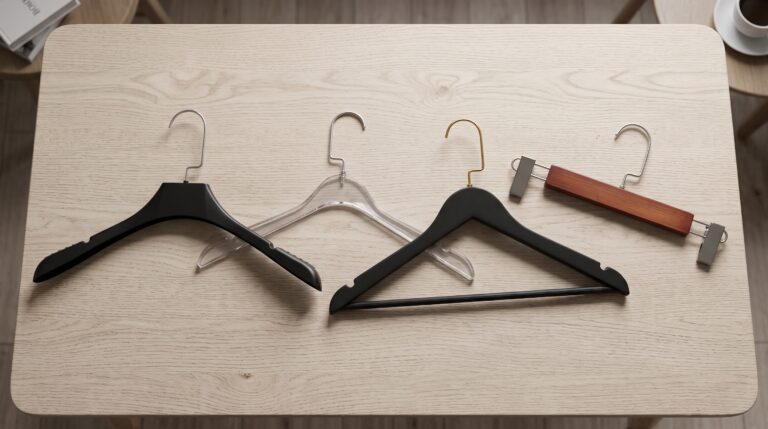
A retail business may need different hangers for different garments:
- Plastic hangers for everyday apparel
- Velvet hangers for delicate garments
- Wooden hangers for premium collections
- Metal hangers for a specific visual style
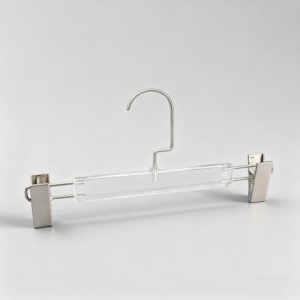
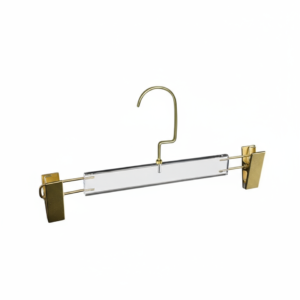
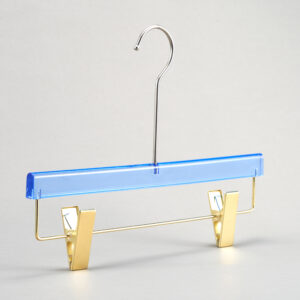
- Clip hangers for trousers and skirts
Buying these items from multiple suppliers can make inventory and purchasing more complicated.
One supplier can potentially simplify the process.
But product range and manufacturing capability are different
A supplier can offer wooden, plastic, velvet and metal hangers without manufacturing all four categories internally.
This is not automatically a problem.
The key question is transparency.
Ask:
“Which products are manufactured in-house, and which are sourced from partner factories?”
For a long-term buyer, understanding this distinction helps with quality control and accountability.
The right hanger depends on the garment
Different materials solve different retail problems.
Plastic hangers
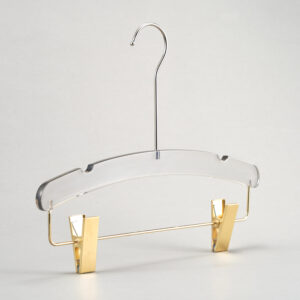
Plastic hangers are often useful for volume retail because they can offer standardized dimensions, lightweight handling and a wide range of shapes and colors. Compare PP plastic hanger models for available sizes and shapes.
Velvet hangers
Velvet or flocked hangers are commonly selected when a softer surface and anti-slip effect are important.
Wooden hangers
Wood hangers can create a more premium visual impression and are often used for jackets, suits, outerwear and luxury-oriented displays. For trouser and skirt displays, compare wooden clip hangers and check the clip arrangement against the garment.
Metal hangers
Metal designs can suit industrial, minimalist or fashion-forward store concepts.
There is no universal best hanger material.
The correct choice depends on garment weight, store concept, budget and brand positioning. Check hanger size and shape against the garments before selecting a model.
When a multi-product supplier is useful
One supplier can be particularly useful when a retailer wants:
- Consistent delivery schedules
- Centralized purchasing
- Fewer invoices
- Consolidated shipments
- Coordinated packaging
- Multiple hanger types for one store rollout
This is especially practical for international retailers opening stores across several markets.
What should buyers compare?
Do not compare every hanger using the same quality criteria.
A wooden hanger and a plastic hanger have different manufacturing processes.
The evaluation should reflect the product.
For example:
Plastic: material, weight, dimensions, strength and surface finish.
Wooden: wood species, moisture condition, sanding, paint, joints and accessories.
Velvet: flocking quality, adhesion, surface coverage and shape.
Metal: wire thickness, coating, welds and corrosion resistance.
Consolidation can create logistics advantages
When multiple hanger types are purchased from one supply chain, buyers may be able to consolidate shipments.
This can simplify logistics planning.
However, consolidation only makes sense if quality and lead time remain under control.
A single supplier should not be selected purely because it can put more products into one container.
FAQ
Can one Chinese supplier provide different types of clothing hangers?
Some suppliers can provide multiple hanger categories either through their own production or partner manufacturing networks. The buyer should confirm which products are made in-house.
Is one supplier better than several suppliers?
Not always. One supplier can simplify purchasing, but multiple specialized suppliers may be better for highly technical or premium products.
Which hanger material is best for fashion retail?
There is no universal answer. Plastic, wood, velvet and metal hangers serve different garments and retail concepts.