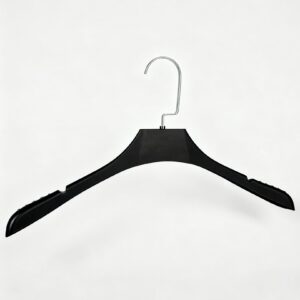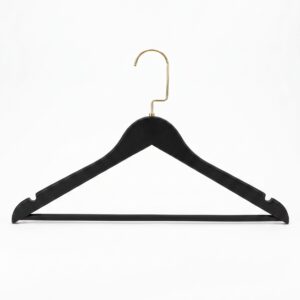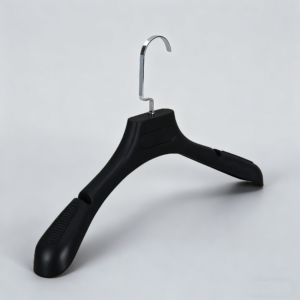
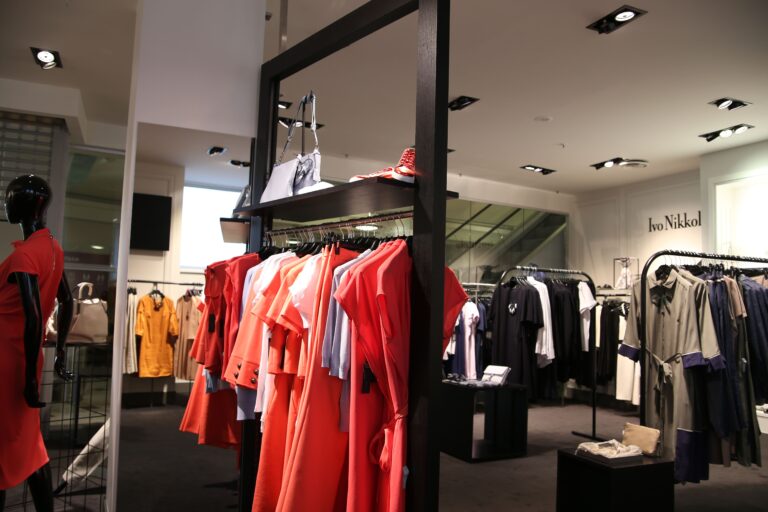
Hanger color is visible on the rail, but it should not be treated as a shortcut to shopper psychology.
A black hanger does not automatically make a garment look more expensive. A gold hook does not create a measurable sales lift by itself. Those claims are difficult to support and are not useful purchasing specifications.
The practical task is simpler: choose a hanger color that works with the merchandise, fixtures, hardware and visual system the store already uses.
Begin With the Merchandise Palette
Look at the actual garments first.
A store carrying mostly dark tailoring may want the hanger to recede. A light neutral collection may need enough contrast for the shoulder line to remain readable. A colorful assortment may work best with a restrained hanger color so the rail does not become visually busy.
Do not decide this from a generic color chart.
Place representative garments on candidate hangers and review them together.
Decide Whether the Hanger Should Recede or Be Visible
There are two legitimate strategies.
Receding hanger: the hanger is visually quiet and lets the garment dominate.
Visible hanger: the body, hook or logo is intentionally part of the brand presentation.
Neither is universally better.
A multi-brand retailer may prefer the hanger to disappear visually. A branded boutique may want a consistent custom color that becomes part of the store system.
The important thing is to decide deliberately.
Coordinate With Fixtures and Interior Materials
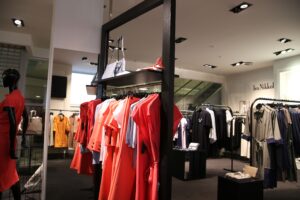
A hanger is rarely seen against a blank background.
Review it next to:
- rail finish;
- shelving;
- wall color;
- mirrors;
- wood or metal fixtures;
- other visible hardware.
The same hanger color can look different in a bright white store and a dark timber interior.
This is why physical evaluation is more useful than a digital mock-up alone.
Review Body Color and Hook Finish Together
The hook is often one of the most visible parts of a hanger.
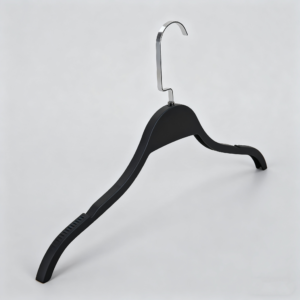
A black body with a silver hook creates a different visual effect from the same body with a gold or dark-finish hook. If clips or metal plates are also visible, include them in the same review.
Do not approve the body color in isolation and choose hardware later from a separate catalogue.
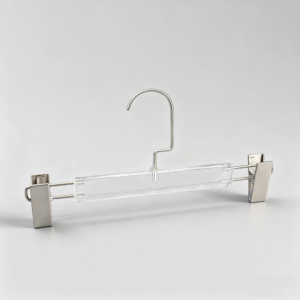
For buyers considering different combinations, Lelvion’s rubber coated hanger range includes several models with configurable hook finishes, while crystal-clear hangers create a very different visual starting point.
Use a Physical Color Reference for Custom Programs
Names such as beige, nude, champagne, ivory and gold are not precise enough for repeat production.
If a custom color matters, use an agreed reference and approve the finished sample on the selected hanger surface.
A color that looks correct on a screen may shift when applied to a molded or coated surface.
For repeat orders, keep the approved color reference with the product specification.
Test the Color Under Store Lighting
Retail lighting can change how colors and finishes are perceived.
A body that looks neutral in daylight may look warmer or cooler in-store. A glossy surface can catch highlights differently from a matte or rubberized surface.
Before standardizing across a chain or large order, test the candidate hanger under lighting close to the real store environment.
Review both:
- the empty hanger;
- the hanger behind representative garments.
The second view is usually more important because that is how customers will see it.
Maintain Consistency Across One Rail
Even when a retailer uses several hanger models, a coordinated color and hardware system can make the rail feel more ordered.
For example, tops, jackets and trousers may require different bodies but still share a black body finish and the same visible hook finish.
This allows product-specific hanger geometry without turning the display into a mixture of unrelated visual elements.
Consistency should be defined by the retailer, not assumed from a universal rule.
Do Not Overcomplicate the Palette Without a Reason
Every additional custom color can add another SKU, approval step and replenishment issue.
A retailer should therefore ask what each extra color is doing.
If one neutral hanger works across most of the assortment, that may be operationally stronger than assigning a different hanger color to every collection.
If a flagship line needs a distinct custom color, keep the exception deliberate and documented.
Brand Color Is Not Automatically the Best Hanger Color
A corporate brand color may work well in a logo but become distracting when used across an entire hanger body.
Test both options.
The brand can appear through a subtle logo while the hanger body stays neutral. Or the hanger itself can carry the brand color if that works with the merchandise and store design.
The decision should be visual and operational, not ideological.
Create a Simple Approval Record
Record:
| Field | Approved choice |
|---|---|
| Hanger model | |
| Body color | |
| Color reference | |
| Surface finish | |
| Hook finish | |
| Logo color | |
| Store lighting tested | Yes / No |
| Garment categories tested | |
| Sample reference |
This makes future reorders easier and reduces the chance that a generic color name is interpreted differently by a new supplier or new buyer.
Treat Color as Part of the Product Specification
Color can support a strong retail presentation, but it should be specified and tested like any other product attribute.
Avoid claims that a particular hanger color will increase conversion unless your own business has credible data showing that effect.
If you are building a coordinated branded hanger program, the Lelvion OEM page can be used to define body color, hook finish, logo and packaging together. Buyers can then send the selected hanger model, color reference and quantity through the contact page for sample and quotation discussion.